Within the high-stakes world of today's professional drifting, success is not merely exclusively a product of brute engine power or pilot bravado. Instead, it has become a complex science that demands a scrupulous fusion of selecting a proven chassis, equipping it with the highest-quality performance components, and, most critically, grasping its live performance on the circuit through advanced vehicle dynamics analysis tools. This comprehensive guide functions as your master plan from the initial idea of a project car right through to the final engineering-refined adjustments that turn a powerful car into a predictable winner. We will examine in detail the methodical process of chassis dynamics adjustment, illustrating how a modern drift tuning app like a dedicated telemetry system eradicates assumptions and provides exceptional visibility into your vehicle's actual performance.
The bedrock of any exceptional drift car is, undoubtedly, the chassis itself. A select group of platforms have attained legendary reputation within the global sliding culture due to their natural handling characteristics, strong design, and the immense availability of aftermarket parts available. Picking the right starting point is the first and most significant selection a builder will make. As an example, the BMW E36 is universally acknowledged as perhaps the the best overall cars for drifting of history. Its excellent 50/50 weight distribution, combined with a rear-wheel-drive configuration and bulletproof six-cylinder engines, forms a platform that is simultaneously easy to handle for beginners and extremely competitive in the hands of a pro competitor. The successor of this philosophy, the BMW E46 platform, refines these attributes with a increasingly developed chassis, wider track for greater stability, and even more lock as standard from the OEM. A different powerful option in the top-level arena is the Chevrolet Corvette C6.
This muscle-derived performance car introduces a distinctive set of advantages to the drifting sport, including a light aluminium frame, a backwards-positioned gearbox and differential unit that contributes to an excellent balance, and the immense low-end power of a big LS V8 motor. This combination makes it an complete force on track, designed of starting and maintaining long angles with apparently easy use of throttle. For drivers desiring exceptional bang-for-the-buck, the 350Z model Nissan rises above as a top-tier choice. It comes from the manufacturer with a rigid platform, a decent original locking differential, and the smooth V6 motor that provides sufficient power and torque for mastering and progressing in the activity. Its successor, the Nissan Z34, brings additional refinements in body strength, suspension design, and outright powerplant power, establishing its position as a common choice among professional competitors. Further legendary platforms that warrant consideration include the agile Wankel-engined Mazda FC RX-7, the most popular S13 Silvia/240SX, the American SN95 generation Mustang, the electronic-equipped BMW E90, and the compact yet incredibly playful and teachable MX-5 Miata. Each of these cars gives a different array of characteristics, complexities, and potentials, but they all have in common the basic ingredients required to serve as a serious drift car.
However, choosing the optimal chassis is only the starting point. To access the true capability of every of these machines, major modifications to the steering system and suspension systems are absolutely mandatory. This is where the realm of specialist drift-spec hardware becomes vital importance. The single most transformative upgrade for a serious drift machine is the fitting of a maximum-angle angle modification kit. These engineered assemblies, for example those manufactured by performance brands like specialist manufacturers, are created to dramatically expand the chassis's maximum steering angle. A factory production vehicle is extremely restricted in how far its steering tires can rotate, a design compromise for on-road operation. In oversteer driving, conversely, aggressive opposite lock is continuously necessary to catch and maintain a angle. An modification kit replaces the factory hubs, tie rods, and sometimes control arms with components that permit the steered wheels to reach degrees of turn beyond 70 or even 80 °, as opposed to a average factory setting of around 40 to 50 °.
This immensely expanded lock gives the pilot with significantly more control during a angle, enabling it to be considerably simpler to initiate a slide, hold it through a extended corner, and transition fluidly from one side to the other. The difference in drivability is truly transformative. Paired with a appropriately chosen angle kit is the just as critical modification to the chassis's suspension. Off-the-shelf or even expensive sport adjustable suspension are just not engineered for the specific and brutal demands of drifting. A dedicated system of suspension units is of utmost importance. These engineered coilovers incorporate specific damping rates and spring strength that are tuned for the extreme mass transition that is inherent of aggressive driving. When a pilot begins a angle, the chassis's weight is transferred rapidly to the outer of the bend. Optimal performance coilovers control this shift in a controllable fashion, allowing the vehicle to settle promptly and giving the pilot accurate feel through the controls and seat. They furthermore provide precise tuning of stance, damping stiffness, and corner weighting, which are all key parts of optimizing the chassis's behavior to a specific venue or piloting technique. In combination, a precision-engineered drift angle kit and a properly specified set of performance coilovers are the core hardware base upon which all future optimization is constructed.
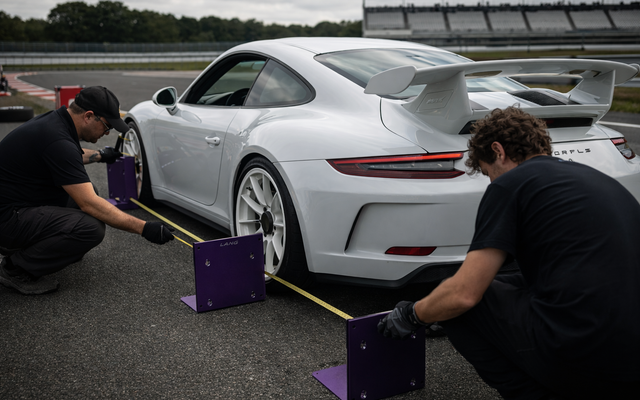
Once the core components is in place, the subsequent essential phase in the development is the precise tuning of the vehicle's wheel angles. This is the domain of chassis dynamics adjustment, a procedure that can feel intimidating to the beginner but is, in reality, the secret to transforming a collection of high-performance components into a harmonious and predictable machine. The most discussed parameter of suspension geometry for sliding is undoubtedly camber angle. Camber is the inclination of the tire compared to the upright plane when observed from the front-on of the chassis. When the top edge of the wheel is angled towards the chassis, this is referred to as negative camber. For drifting, negative camber on the front axle tires is widely employed and is considered necessary. The reason is deeply linked to physics.
When a vehicle is turning at extreme slip angles, the body rolls toward the external of the bend. This chassis roll makes the outer steering tire to diminish its ideal footprint with the tarmac. By applying inward lean, the wheel is pre-leaned to compensate for this tilt. As the chassis tilts into the bend, the tire flattens out against the track, optimizing its traction at the exact point when it is most required for steering authority. Commonly, front axle adjustments for a competition drift machine vary from approximately -3 degrees to as extreme as -5 degrees or even beyond, depending on the specifics of the chassis geometry, tire selection, and pilot feel. The rear axle wheels also use inward tilt, but the angles are generally more conservative and more nuanced than the front. Too much negative camber at the back can cause the vehicle to extremely prone to oversteer and challenging to manage on throttle application, as it diminishes the available tire footprint of the driven tires during forward power delivery. Therefore, rear axle adjustments are commonly in the vicinity of -1 degree to -3 degrees, finding a delicate compromise between offering enough cornering grip to aid in initiating and maintaining the angle while simultaneously keeping effective grip for power-down the turn. camber angle is just one part of the larger tuning picture, which also encompasses toe, caster, and suspension-induced steering correction.
Toe setting describes the orientation of the wheels when viewed from the top. Positive toe means the leading edges of the tires are nearer together than the trailing edges, while negative toe means the converse. For oversteer, a modest amount of front axle negative toe is commonly run to improve the initial response steering feel, making the car feel more nimble and ready to start a drift. Rear axle toe is usually set to neutral or a extremely slight amount of toe-in to foster stability under throttle. Caster is the forward or rearward angle of the steering axis when viewed from the side-on of the vehicle. Increased caster increases self-centering and high-velocity solidity, and it additionally boosts camber increase during cornering, which is extremely advantageous. Adjusting these parameters is a complex interaction where a change to a single parameter can and often will impact the others. The conventional process for dialing in a vehicle's suspension geometry for drifting has historically been a tedious affair of guesswork and adjustment. A driver or crew would make drift tuning app a change based on experience, run the vehicle on track, rely on the driver's personal sensation and feedback, and then make an additional tweak. This process would iterate time after time until the vehicle felt "right" or the available practice period ended. This methodology is not only extremely inefficient in terms of hours and costs, but it is also inherently imprecise.
Driver perception is a notoriously inconsistent data source, colored by numerous variables such as tiredness, evolving track surfaces, weather, and just the focus of the operator on that particular session. What feels "loose" on one lap might feel "pushing" on the subsequent run, resulting in conflicting feedback and ineffective tweaks. This traditional challenge in chassis setup is precisely where modern telemetry systems has stepped in to transform the process.
The rise and adoption of sophisticated drift telemetry software has ushered in a new paradigm for engineering and refining professional sliding vehicles. This new generation of tools, exemplified by groundbreaking solutions like modern telemetry hardware, operate by directly capturing the actual physical performance of the vehicle as it is operated on the circuit. In contrast to using subjective feedback, these systems collect measurable data on critical variables such as shock absorber movement, corner velocities, lateral and longitudinal g-forces, steering angle, and throttle and brake input. This acquired data stream is then processed by coilover setup tips advanced software that can plot and analyze the information in a clear way. For the first time, tuners and crews can visualize exactly what the chassis is doing at each millisecond of a slide. This capability changes the complete suspension tuning procedure. Consider the particular goal of dialing in the front negative camber for a specific car. Rather than making a modification from -3 degrees to -3.5 degrees and then running several laps to try and "feel" a difference, a telemetry system can give immediate and irrefutable information. The tool can indicate graphically how the tire's contact patch is performing during the most important phases of a angle: turn-in, mid-corner, and changing direction. It can show if the current value is allowing the steering tire to achieve ideal grip or if the compound is working inefficiently on its outer edge.
The system can after analysis make data-driven suggestions for modification. Perhaps the data shows that the tire is even stressing its sidewall at -3.5 degrees of negative camber, suggesting that even more inward lean, say -4 degrees, might be warranted. Conversely, the data might indicate that the tire is failing to achieving heat or that the inside shoulder is degrading unevenly, which could point to that there is overly aggressive angle and a small reduction back to -3.2 degrees would be more optimal. This level of precision and actionable intelligence was literally unimaginable in the days of pure mechanical adjustment.
The benefit of using a dedicated drift telemetry system reaches well beyond just optimizing alignment. It serves as an priceless coilover setup tips that is tailored to your particular vehicle. When fine-tuning the rebound and compression values on your adjustable dampers, instead of using general guidelines or replicating another driver's numbers, you can employ the data to observe how the chassis is reacting in response to your tweaks. The software can graph the suspension travel path over a section of track, showing if the coilovers are handling the weight transfer effectively or if they are causing the chassis to oscillate excessively after a direction change. It can aid in pinpointing issues like excessive compression or excessive extension, permitting you to introduce educated choices to preload settings, rebound/compression values, or ride height. This methodology applies equally to the detailed art of car alignment tuning. In addition to camber angle, the system can offer analysis into how modifications to toe settings and caster angle are impacting the car's stability during specific parts of a slide. For example, it can allow you to ascertain the best amount of front toe out for your individual steering rack configuration and competition style by analyzing the quickness of turn-in response and the consistency of the vehicle at lock steering angle. This makes the system an extremely useful drift suspension tuning guide that is dynamically informed by the live performance of your specific car on the circuit. It moves the whole endeavor from a mysterious craft into a scientific development process.
Furthermore, the utility of a system like modern telemetry is not at all limited to expert teams with extensive funding. For the club-level driver, it serves as an powerful equalizer. It practically gives the driver with the analysis of a full-time race engineer without the typical expense. It speeds up the tuning process by delivering definitive directions to questions that would otherwise take seasons of experience to answer. A builder can learn how their individual chassis behaves to different inputs, gaining a deeper understanding of suspension theory in the process. It furthermore makes accessible professional chassis dynamics concepts, allowing every enthusiast with the ambition to refine their car to do so in a efficient and productive fashion. This is especially significant in a sport like sliding, where engineering knowledge has historically been a tightly held advantage among top teams. Now, that capability can be in the hands of every dedicated enthusiast.
In the final analysis, the journey to building and tuning the ideal high-performance drift machine is a comprehensive project that seamlessly blends proven hardware principles with revolutionary telemetry solutions. It begins with the strategic choice of a legendary chassis, then enhanced by the integration of essential competition hardware like drift-spec angle modification systems and correctly valved performance suspension units. The journey then moves into the intricate stage of chassis dynamics adjustment, where values like negative camber, toe setting, and caster are precisely configured to match the chassis's new capabilities and the pilot's individual style. Finally, and what genuinely differentiates the today's process from the traditional methods, is the integration of a advanced vehicle dynamics tool. This car alignment tuning tool eradicates the uncertainty and waste of solely subjective tuning by delivering objective, real-time data on how the vehicle is actually performing. It functions as an indispensable engineering partner, a actionable drift suspension tuning guide, and a master vehicle dynamics tool. Together, this complete philosophy guarantees that each and every aspect of the drift car—from the pick of the platform to the last click on the suspension—is refined for peak performance on the competition venue. It signifies the total maturation of the art of oversteer driving, merging mechanical car control with data-informed chassis dynamics to create the ultimate effective machines imaginable.